
Cat Towers for Large Cats
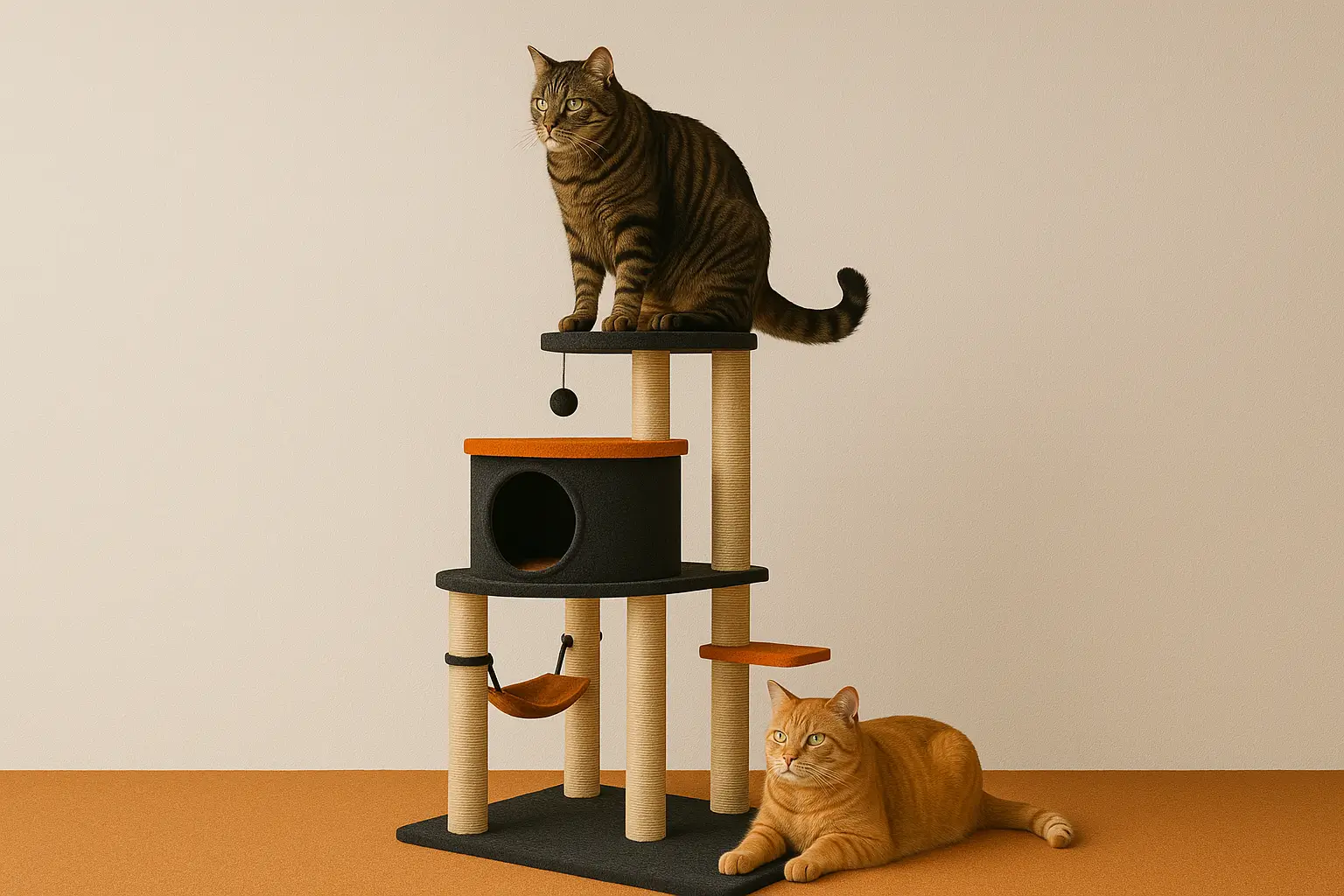
Find the perfect cat towers for large cats built to handle the size, weight, and strength of bigger breeds. Our selection features reinforced construction, extra-wide platforms, and heavy-duty materials that standard towers simply can’t match. Whether you have a Maine Coon, Ragdoll, British Shorthair, or any substantial feline, these towers provide safe climbing, comfortable resting spots, and durable scratching surfaces designed specifically for cats weighing 15 pounds and above. Give your large cat the sturdy, spacious tower they deserve, with construction that prioritizes both safety and long-lasting quality.
Showing the single result
-
Cat Trees, Cat Furniture, Pet Supplies
Original price was: 129,99 €.84,99 €Current price is: 84,99 €. Add to basket

Showing the single result
Why Standard Towers Don’t Work for Large Cats
If you’ve ever watched your large cat attempt to use a standard tower, you’ve likely witnessed the problem firsthand. Platforms that wobble under their weight, perches too small for them to curl up comfortably, and scratching posts that bend when they lean into a good stretch. Standard towers are engineered for average-sized cats, typically those weighing 3.5-5.5 kg. When your cat weighs 8, 10, or even 14 kg, those specifications simply don’t cut it.
Cat towers for large cats address these limitations with purpose-built design. From the ground up, every component is scaled and reinforced to handle substantial weight, powerful movements, and the natural behaviors of bigger felines. This isn’t just about comfort; it’s about providing a safe environment where your large cat can express their natural climbing and scratching instincts without risk of injury or structural failure.
Understanding the Engineering Behind Large Cat Towers
The construction differences between standard and large cat towers are substantial and measurable.
Foundation Strength: Large cat towers start with bases measuring 66-102 cm across, compared to 46-61 cm on standard models. The base weight alone often exceeds 14 kg, creating a low center of gravity that resists tipping even when your cat launches off the highest platform.
Post Construction: Support posts on towers for large cats use 11-13 cm diameter pillars made from solid wood or dense engineered wood. These thicker posts don’t just support more weight; they provide better scratching resistance and won’t bow or bend over time.
Platform Engineering: Each level features reinforced platforms with weight ratings of 16-20 kg individually. The platform surfaces measure 41-56 cm to accommodate a large cat lying fully extended or curled in their preferred sleeping position.
Joint Reinforcement: Connection points between posts and platforms use heavy-duty hardware with multiple attachment points. This distributed load bearing prevents stress concentration that causes standard towers to weaken and fail.
The Benefits of Properly Sized Towers
Providing your large cat with an appropriately sized tower delivers benefits that extend beyond the obvious.
Physical Health: Large cats are prone to obesity and joint issues. A tower that accommodates their size encourages climbing activity, providing low-impact exercise that maintains muscle tone and joint flexibility. The ability to climb confidently without struggling motivates more frequent use.
Behavioral Wellness: Cats deprived of appropriate vertical territory often develop behavioral issues. They may become territorial, aggressive, or anxious. A sturdy tower gives your large cat control over their environment, the ability to survey their domain from elevated positions, and retreat spaces when they need solitude.
Furniture Protection: Large cats who can’t use their designated tower will find alternatives. Your sofa, curtains, and door frames become scratching posts. Heavy cats climbing bookshelves or entertainment centers risk both injury and property damage. A tower that actually works for them redirects these behaviors safely.
Stress Reduction: In Cyprus homes where families spend considerable time indoors during hot summer afternoons or cozy winter evenings, cats need their own space. Large cats particularly benefit from having territory where they feel secure and can observe without being in the middle of activity.
What Makes a Tower Suitable for Large Cats
Shopping for large cat towers requires attention to specific features and specifications.
Verified Weight Ratings: Don’t trust vague marketing claims. Look for towers with clearly stated weight capacities for individual platforms and overall structure. For cats over 8 kg, individual platform ratings should start at 14 kg minimum.
Dimensions That Matter: Measure the actual platform sizes, not the overall tower height. A 1.8 metre tall tower with 30 cm platforms fails large cats. A 1.5 metre tower with 46 cm platforms serves them perfectly. Interior condo dimensions should allow your cat to enter easily and turn around inside.
Material Durability: Premium towers use real wood frames, not particle board or cardboard. Carpet should be commercial-grade, tightly glued, not just stapled. Sisal rope covering on posts needs tight, gap-free winding that withstands aggressive scratching.
Design Considerations: Look for graduated heights between levels. Large cats, especially older ones, appreciate platforms spaced 30-46 cm apart rather than 61 cm leaps. Some towers include ramps, which are excellent for heavy cats as they reduce joint impact.
Selecting the Right Tower for Your Home and Cat
Every large cat and home situation is unique. Consider these factors when choosing.
Your Cat’s Personality: Is your large cat athletic and playful, or calm and sedentary? Active cats want multiple levels and features. Laid-back cats prioritize one or two excellent lounging spots over climbing challenges.
Available Floor Space: Large cat towers have significant footprints. Measure your intended space and compare it to tower base dimensions. Remember you need clearance around the tower for your cat to approach and exit comfortably.
Ceiling Height: In Cyprus apartments and homes, ceiling heights vary. Ensure your chosen tower fits with at least 15 cm of clearance at the top. This prevents your cat from hitting the ceiling during jumps and allows air circulation.
Household Dynamics: Multiple cats need multiple resting spots. The general rule is two perches per cat, but with large cats, they may need exclusive access to certain platforms that smaller cats can’t displace them from.
Aesthetic Preferences: Modern large cat towers come in various colours and styles. While function trumps form, you’ll be happier with a tower that complements your decor, increasing the likelihood you’ll place it in optimal, social areas of your home.
Setting Up and Maintaining Your Tower
Proper installation ensures safety and longevity.
Assembly Precision: Follow instructions carefully, ensuring all bolts and screws are fully tightened. Large cat towers have many connection points; each one matters. Double-check everything before allowing your cat to use the tower.
Strategic Placement: Position towers on level, solid flooring away from hazards. Near windows is ideal, but ensure direct sunlight won’t overheat dark-coloured plush surfaces. Keep towers away from ceiling fans or hanging light fixtures.
Regular Maintenance: Check stability weekly during the first month, then monthly thereafter. Large cats gradually loosen hardware through normal use. Vacuum thoroughly every week to prevent fur buildup, which can harbor dust mites and allergens.
Component Care: When sisal posts show wear, rewrap them with fresh sisal rope rather than replacing the entire tower. Clean carpeted surfaces monthly with pet-safe enzyme cleaners. Address any loose carpet immediately before your cat can pull it further.
Introducing Your Large Cat to Their New Tower
Some large cats claim their tower immediately; others need encouragement.
Start by placing the tower in a social area where your cat already spends time. Sprinkle catnip on platforms or hide favourite treats in different spots. Use interactive toys to draw your cat up the levels, rewarding them when they explore.
Be patient. Large cats can be cautious about new structures, particularly if they’ve experienced unstable furniture before. Once they realize the tower is rock-solid, they’ll gain confidence. Some cats take days or even weeks to fully embrace their tower.
If your cat continues ignoring the tower, verify it’s truly stable. Even slight wobbling will deter a cautious large cat. Consider whether the tower is positioned well or if competing furniture offers easier access to preferred views.
Frequently Asked Questions
What’s the difference between cat towers and cat trees for large cats?
The terms are often used interchangeably, though “towers” sometimes refers to taller, more vertical structures while “trees” may suggest more branching designs. What matters most is the construction quality, weight capacity, and platform size rather than the specific terminology used.
How heavy should a tower be for a 9 kg cat?
The complete tower should weigh at least 18-23 kg to provide stability for a 9 kg cat. Heavier is better, as weight creates stability. Look for towers with 23-32 kg total weight for optimal safety with large cats.
Can cat towers for large cats accommodate multiple cats?
Yes, they’re excellent for multi-cat homes. The reinforced construction easily supports multiple smaller cats or several large cats using different levels simultaneously. Ensure the tower has enough platforms so cats aren’t competing for prime spots.
Do large cat towers fit in small apartments?
Many compact designs exist specifically for space-limited homes. Look for towers with smaller footprints (around 76×76 cm) but strong vertical construction. These provide essential climbing and scratching in minimal floor space, perfect for Cyprus apartment living.
Are expensive large cat towers worth the investment?
Quality large cat towers cost more due to superior materials and engineering, but they last significantly longer. A €200-300 tower that lasts 8-10 years costs less long-term than replacing €80 towers every 2 years. Plus, your cat’s safety is invaluable.
What if my large cat is also a senior cat?
Choose towers with lower platform heights and closer spacing between levels, or those including ramps. Senior large cats need the vertical space but with easier accessibility. Some towers designed for large cats specifically address mobility concerns.
How do I know if a tower is stable enough?
Check the base dimensions (larger is better), overall weight (heavier is better), and customer reviews mentioning stability. Once assembled, push firmly on the top platform. Minimal movement is acceptable; significant wobbling means it’s not suitable for large cats.
Should I choose a floor-to-ceiling tower for my large cat?
Floor-to-ceiling tension-mounted towers can work well for large cats if they’re specifically rated for heavy use. The ceiling tension provides extra stability that traditional towers get from heavy bases. Verify the weight capacity and ensure you have suitable ceilings for mounting.
Can outdoor cat towers work for large cats in Cyprus?
Outdoor towers designed for large cats can work beautifully in Cyprus’s climate, particularly for enclosed patios or balconies. Ensure they’re made with weather-resistant materials that handle sun exposure and occasional rain. Indoor towers aren’t suitable for outdoor use.
What maintenance do cat towers for large cats require?
Weekly vacuuming to remove fur, monthly hardware checks to tighten bolts, occasional spot cleaning of surfaces, and eventual replacement of worn sisal posts. Large cats create more wear than smaller cats, so expect to perform maintenance more frequently than with standard towers.