
Tall Cat Trees
Transform your home into a feline paradise with our collection of tall cat trees that maximize vertical space and satisfy your cat’s instinct to climb high. Rising from 1.5 to 2.4 metres or more, these impressive structures offer multiple levels, elevated perches, and expansive territory for cats who love heights. Perfect for active cats, multi-cat households, or anyone wanting to provide maximum enrichment without consuming excessive floor space, tall trees create dramatic climbing opportunities that keep cats entertained for hours. Each design combines height with stability, ensuring your cat can reach impressive elevations safely and confidently.
Showing the single result
-
Cat Trees, Cat Furniture, Pet Supplies
Original price was: 129,99 €.84,99 €Current price is: 84,99 €. Add to basket

Showing the single result
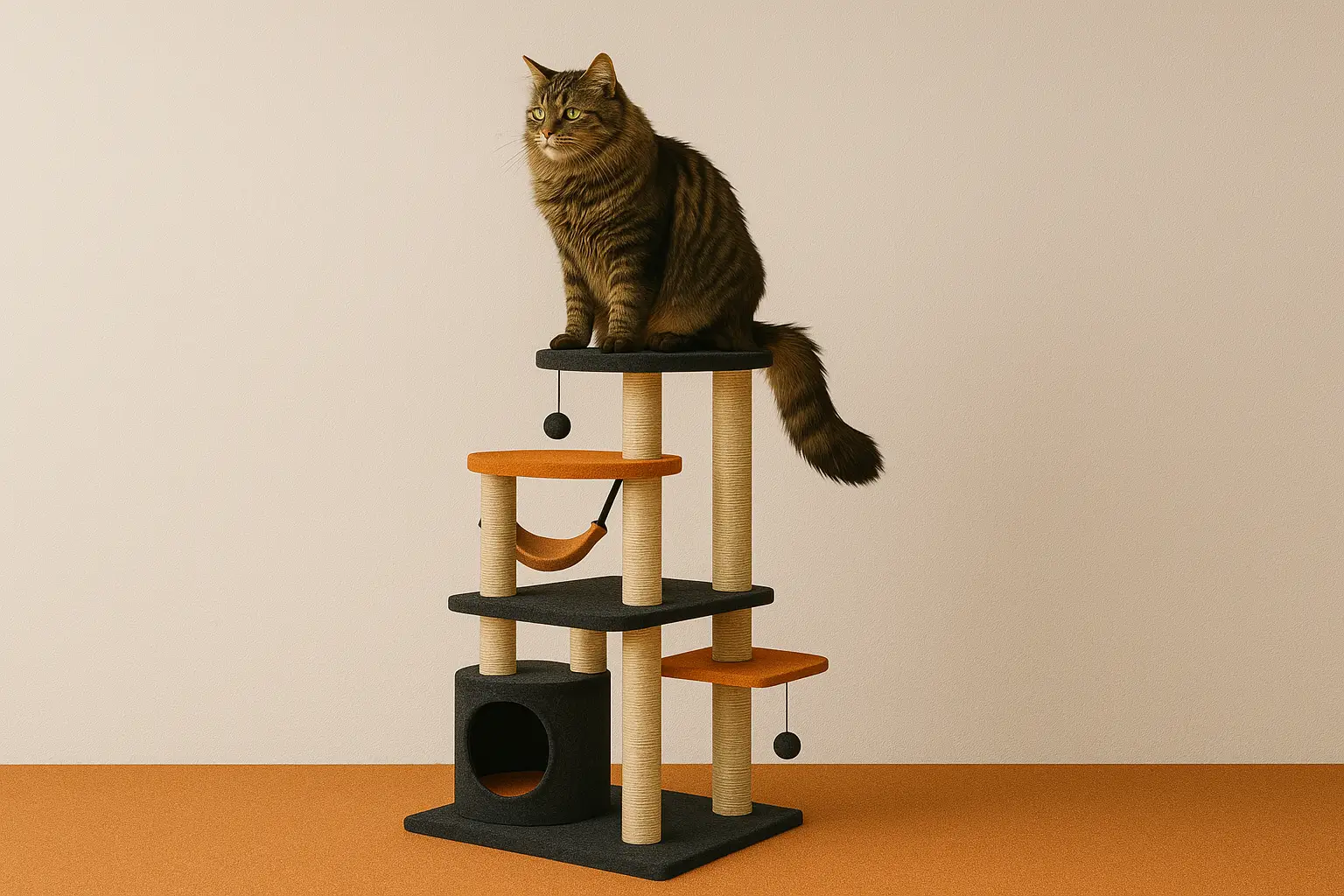
The Appeal of Tall Cat Trees
Cats are natural climbers, hardwired with instincts that drive them to seek the highest possible vantage points. In the wild, elevation means safety from predators, better hunting visibility, and territorial dominance. Indoor cats retain these powerful instincts, which is why they gravitate toward the tops of refrigerators, bookshelves, and any available high surface. Tall cat trees provide a purpose-built solution that channels these behaviors safely while creating impressive vertical environments within your home.
A tall cat tree isn’t just furniture; it’s a three-dimensional playground that transforms vertical space into usable cat territory. While a standard 90 cm tree might offer basic climbing, a 1.8 or 2.1 metre tower creates an entirely different experience, with multiple distinct zones your cat can explore, claim, and enjoy throughout the day.
Why Height Matters for Cats
The benefits of vertical space extend far beyond simple entertainment.
Psychological Security: Elevation provides cats with a fundamental sense of safety. From high perches, they can observe their environment without feeling vulnerable, reducing stress and anxiety. This is particularly valuable in busy households where floor-level activity can feel overwhelming.
Territory Expansion: Floor space is limited, but vertical space is often underutilized. A tall cat tree effectively multiplies your cat’s usable territory without requiring additional square footage. This vertical expansion is especially valuable in apartments and smaller homes common throughout Cyprus.
Exercise and Health: Climbing tall structures provides excellent cardiovascular exercise and builds muscle strength. The act of ascending and descending multiple levels helps cats maintain healthy weight, improves coordination, and keeps joints flexible. Active cats are healthier cats.
Mental Stimulation: Each level of a tall tree offers different perspectives, creating environmental enrichment that prevents boredom. Cats can choose different heights based on their mood, whether they want to observe from the summit or relax at mid-levels.
Multi-Cat Harmony: In households with multiple cats, height creates hierarchy opportunities without conflict. Dominant cats can claim top perches while others occupy mid and lower levels, establishing peaceful coexistence through spatial separation.
What Defines a Tall Cat Tree
Generally, cat trees are considered tall when they reach 1.5 metres or higher. The categories typically break down as follows:
Moderately Tall (1.5-1.8 metres): These provide substantial climbing while fitting comfortably in rooms with standard 2.4 metre ceilings. They offer 4-6 distinct levels and work well for most single or two-cat households.
Very Tall (1.8-2.1 metres): These impressive structures create dramatic vertical environments with 6-8 platforms. They’re ideal for very active cats, climbers, or homes with three or more cats needing separate territories.
Extra Tall (2.1-2.4+ metres): These maximum-height trees approach ceiling limits and provide the ultimate climbing experience. Some designs are adjustable to fit various ceiling heights, while others are fixed at specific measurements.
Floor-to-Ceiling Models: These tension-mounted towers extend from floor to ceiling, typically adjustable for 2.3 to 2.7 metre ceilings. They use ceiling pressure for stability rather than relying solely on base weight.
Key Benefits of Choosing Tall Trees
The advantages of height extend throughout your cat’s daily life.
Space Efficiency: Tall trees maximize vertical space rather than horizontal space. A tree with a 76×76 cm footprint that reaches 2.1 metres high provides more usable cat territory than a sprawling 1.5 metre wide, 90 cm tall structure that consumes valuable floor area.
Multiple Activity Zones: Different heights serve different purposes. Top platforms are observation decks. Mid-level perches work for napping. Lower platforms with attached toys become play zones. This variety keeps cats engaged.
Window Access: Tall trees positioned near windows bring your cat to optimal viewing height for watching birds, people, and outdoor activity. This natural entertainment is particularly enjoyable in Cyprus, where pleasant weather means frequent outdoor activity year-round.
Reduced Furniture Climbing: When cats have access to appropriate tall structures, they’re less likely to scale your curtains, climb bookshelves, or leap onto kitchen counters. The designated climbing space satisfies their needs safely.
Interior Design Impact: A well-designed tall cat tree can serve as an attractive focal point rather than an eyesore. Modern designs in neutral colours complement contemporary decor while serving their functional purpose.
Choosing the Right Tall Cat Tree
Selecting the perfect tall tree requires balancing multiple factors.
Ceiling Height Considerations: Measure your ceiling height accurately. Leave at least 15-30 cm between the tree’s top platform and your ceiling. This clearance prevents cats from hitting the ceiling during jumps and ensures adequate airflow. Most Cyprus homes have standard 2.4 to 3 metre ceilings, accommodating trees up to 2.1 metres comfortably.
Stability is Critical: Height amplifies instability. A tree that wobbles slightly at 90 cm becomes dangerously unstable at 2.1 metres. Look for wide bases (minimum 71×71 cm for trees over 1.8 metres), heavy construction (23+ kg total weight), and thick support posts. Some very tall trees include wall attachment points for additional security.
Platform Spacing: Consider the vertical distance between platforms. Active young cats handle 45-60 cm gaps easily. Senior cats, kittens, or less athletic cats need closer spacing of 30-38 cm. Some tall trees include varied spacing to accommodate different abilities.
Your Cat’s Age and Ability: Kittens and young adults love the challenge of tall trees and will use every level. Older cats may struggle with extreme heights but still enjoy moderately tall trees. Match the tree to your cat’s current and anticipated future mobility.
Construction Quality: Tall trees must use quality materials. Solid wood or dense engineered wood posts, thick carpet or plush covering, and metal hardware at connection points ensure longevity. Cheap construction becomes dangerous at height.
Number of Platforms: More height allows for more levels. Look for at least one platform per 30-38 cm of height, ensuring your cat has adequate resting spots throughout their climb and doesn’t face exhausting leaps between levels.
Safety Considerations for Tall Trees
Height increases the importance of safety features.
Base Weight and Width: The base is your primary safety feature. For trees 1.8 metres and taller, look for bases measuring at least 76×76 cm with total tree weight exceeding 23 kg. Wider is always better for tall structures.
Wall Mounting Options: Many tall trees include brackets for anchoring to walls. For trees over 1.8 metres or in homes with active multiple cats, using these attachments provides crucial additional stability. This is particularly recommended if you have very athletic cats who launch themselves forcefully.
Material Integrity: Inspect connection points where platforms attach to posts. These should use multiple screws or bolts, not just staples or single fasteners. Quality trees have reinforced joints that distribute weight across multiple attachment points.
Regular Maintenance: Tall trees require more frequent stability checks than shorter models. Check all hardware monthly, tightening any loose connections immediately. The height amplifies any structural weakness, making maintenance non-negotiable.
Placement Strategies for Tall Trees
Where you position your tall tree significantly impacts its use and safety.
Choose locations with level, solid flooring. Uneven surfaces compromise stability, especially problematic with tall structures. Carpeted floors provide natural grip, but hard floors work well when the base is sufficiently heavy.
Windows make excellent placement spots for tall trees. Position the tree so top platforms align with window height, giving your cat prime viewing access. The natural light and outdoor visibility make these spots highly desirable.
Avoid placing tall trees directly under ceiling fans or near hanging light fixtures. Cats jumping from top platforms need clear space above and around the tree.
Consider room traffic patterns. While cats like being in social areas, you don’t want the tree creating obstacles or tight squeezes in high-traffic zones.
Maintaining Your Tall Tree
Proper care ensures longevity and continued safety.
Weekly Cleaning: Vacuum all platforms, starting from the top and working down. Tall trees collect fur throughout multiple levels, and regular removal prevents buildup. Use vacuum attachments designed for upholstery.
Monthly Inspections: Check every bolt, screw, and connection point. Start at the base and work upward systematically. Tighten anything showing even slight looseness. The cumulative stress of cats climbing affects hardware over time.
Sisal Post Care: Scratching posts on tall trees often see heavy use. When sisal becomes frayed or loose, replace or rewrap it promptly. Compromised scratching surfaces might lead your cat to seek alternatives.
Platform Condition: Monitor carpet and plush surfaces for excessive wear or pulling. Address problems immediately before they worsen. Tall tree platforms are harder to repair than those on shorter trees, making preventive maintenance especially important.
Frequently Asked Questions
How tall should a cat tree be?
The ideal height depends on your cat’s preferences and your space. Most cats enjoy trees between 1.5-1.8 metres tall, which provide substantial climbing without requiring excessive ceiling clearance. Very active cats or multi-cat households benefit from 1.8-2.1 metre trees. Measure your ceiling height and subtract at least 30 cm to determine your maximum tree height.
Are tall cat trees safe?
Yes, when properly constructed and maintained. Look for wide bases, heavy overall weight, quality materials, and solid construction. Follow assembly instructions precisely, check stability regularly, and use wall anchors if provided. A well-made tall tree is extremely safe, while a cheaply constructed one can be dangerous regardless of height.
Will my cat actually use all the levels on a tall tree?
Most cats do explore and use multiple levels, though they often develop favourite spots. Different levels serve different purposes throughout the day. Cats might sleep on mid-level perches, play on lower platforms, and observe from top perches. The variety encourages regular use even if they don’t visit every level daily.
Can tall cat trees fit in apartments?
Absolutely. Tall trees are actually ideal for apartments because they maximize vertical space rather than consuming limited floor space. A tree with a 76 cm square footprint that reaches 1.8 metres high provides more cat territory than sprawling shorter structures. Just ensure your ceiling height accommodates the tree with adequate clearance.
How do I keep a tall cat tree stable?
Start with a tree designed for stability: wide base, heavy construction, and quality materials. Assemble carefully, tightening all hardware completely. Place on level flooring. For trees over 1.8 metres, use provided wall anchors. Check and tighten connections monthly. Avoid placing on uneven surfaces or thick, soft carpet that allows shifting.
What’s better: one tall tree or multiple shorter trees?
For single-cat homes, one quality tall tree often provides better value and more interesting vertical variety than multiple shorter ones. For multi-cat households, the answer depends on your cats’ relationships. Compatible cats share tall trees well, while cats who don’t get along might need separate structures in different areas.
Do tall cat trees work for senior cats?
Senior cats can use moderately tall trees (1.5-1.8 metres) if platforms are spaced closely (30-38 cm apart) or if the tree includes ramps. Extremely tall trees (2+ metres) may be challenging for cats with arthritis or reduced mobility. Consider your senior cat’s current climbing ability when selecting height.
How much weight can tall cat trees support?
This varies by construction quality. Look for specifications stating individual platform weight limits and total capacity. Quality tall trees support 18-27 kg total, with individual platforms rated for 9-14 kg. Trees designed for multiple cats or large breeds have higher ratings. Always verify specifications before purchasing.
Should I get a floor-to-ceiling tower or a standard tall tree?
Floor-to-ceiling towers offer maximum stability through ceiling tension and often reach greater heights. However, they require suitable ceilings and can’t be moved easily. Standard tall trees with proper bases offer excellent stability while allowing flexibility in placement. Choose based on your space constraints and whether you might relocate the tree.
Can I place a tall cat tree on a balcony in Cyprus?
Outdoor placement requires weather-resistant materials. Most indoor tall trees aren’t designed for outdoor elements like sun exposure, humidity, and rain. If you want balcony cat furniture, look specifically for outdoor-rated products. Indoor trees will deteriorate quickly in outdoor conditions, and weathering can compromise structural safety.